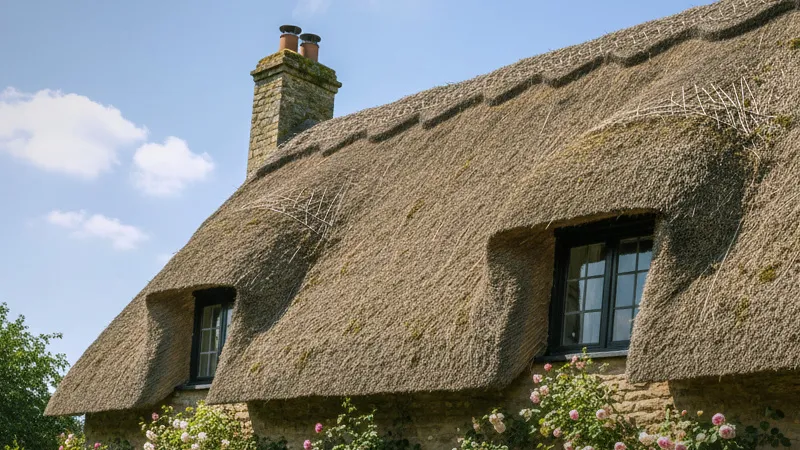
What is thatched roof property insurance?

Owning a thatched roof home means embracing character, but it also affects your insurance. Thatched properties are considered non-standard construction, which means traditional insurers may either decline cover or charge higher premiums.

Specialist insurers understand that a thatched roof will require specialist repairs. They reflect this with insurance that covers higher rebuild costs, and typically provide suitable support when it comes to claims and repairs.

Thatched insurance protects both the structure and contents of your character home if damage is caused by the likes of fire, flood, storms, falling trees or burst pipes. While cover includes typical events, policies also tackle thatch-specific risks, like fire spread and roof replacement after wind damage.

What is covered by thatched roof property insurance?

With multiple insurers to compare and choose from, you should be able to get cover for all the main types of thatched roofs, including combed wheat, Devon reed, Norfolk Reed, water reed, long straw and fibre. Just as importantly, you can find cover if your property is heated by open fires, wood burners or solid fuel stoves, as well as gas, oil and electrical heating.

When you take out specialist thatched roof property insurance, your policy will cover the same things as standard building insurance, typically including:

  • Fire cover: Fire is a big concern for thatched roofs, and policies typically include fire damage cover.

  • Storm and flood cover: Bad weather can cause a lot of damage to thatched homes, but with storm and flood damage covered you can relax knowing you’re protected if nature throws a tantrum.

  • Buildings and property owners’ liability: This covers the cost of repairing your home if it’s damaged, plus protection if you’re held responsible for injury or damage to others.

Don’t forget contents insurance too - which you can get as standalone cover or combined with buildings insurance - and this typically includes:

  • Damage from disasters: Fire, smoke, storms, flooding or burst pipes – if your stuff gets damaged by events like these, you’re usually covered.

  • Theft and attempted theft: If your belongings are stolen or damaged in a break-in, your policy should help with replacements and repairs.

  • New-for-old replacements: If something can’t be fixed, many policies will replace it with a brand-new equivalent, whether it’s a sound system, laptop or TV.

  • Accidental damage (optional): From a broken laptop screen to a TV falling off the wall , you can often add cover for life’s little mishaps.

  • Alternative accommodation: If your accommodation becomes unliveable due to damage, some policies help with the cost of temporary housing and storing your belongings.

Plus, you’ll have a choice of optional extras including accidental damage to belongings, personal possessions outside your home, legal cover and more.

What isn’t covered?

No insurance can cover absolutely everything, so it’s important to check what’s excluded from your policy. Depending on the insurer and policy, some things typically not covered include:

  • General wear and tear or gradual deterioration.

  • Damage caused by wet rot, dry rot, or frost.

  • Storm damage to fences, gates, or hedges.

  • Problems resulting from poor workmanship or design faults.

  • Any events or damage that happened before your policy started, or situations you knew about beforehand (like a flood warning for your area).

  • Loss, damage, or liability caused by deliberate or criminal actions by you or anyone living with you.

  • Damage caused by domestic animals, such as chewing, scratching, tearing or fouling.

Make sure you read the full policy details carefully to understand all the exclusions.

Home insurance guides

Answering your questions about thatched roof property insurance

Compare more types of home insurance cover

Explore your home insurance options to find a policy that’s best for you and your property.

You might also be interested in